

Top 10 Dolly Parton Songs: Timeless Legacy

There are some artists whose passing feels like the closing of an entire chapter of music history. Dolly Parton was one of them. For generations of listeners, she was never simply a country singer with a recognizable voice, rhinestone costumes and larger-than-life blonde hair. She was a storyteller who could make a song about poverty feel rich with love, turn heartbreak into something beautiful, make an ordinary working day sound like an anthem, and somehow speak to people who had grown up thousands of miles away from the Tennessee mountains she called home.
Dolly Parton died in Nashville on August 25, 2026, at the age of 80, bringing an extraordinary life and career that stretched across nearly six decades to a close. The news was followed by an outpouring of grief from fans, musicians, actors and public figures around the world, a reminder of how unusual her place in popular culture had become. She belonged to country music, certainly, but she had long since grown beyond the borders of any single genre. She was a songwriter, actress, entrepreneur, philanthropist and, perhaps most importantly, a person whose warmth seemed to survive the enormous machinery of fame.
The response to her passing also showed just how alive her music remains. On the day of her death, Dolly’s catalog drew approximately 26.3 million official on-demand streams in the United States, an increase of more than 2,000 percent from the previous Tuesday. “Jolene,” “9 to 5” and “Islands in the Stream” led that extraordinary return to her music as old fans listened again and younger listeners discovered the songs behind the legend.
Trying to choose only ten Dolly Parton songs from a catalog that spans decades is almost impossible. She wrote thousands of songs during her lifetime, and different generations will inevitably have different favorites. This ranking is therefore not meant to reduce her career to a definitive chart. Instead, these are ten recordings that, through their popularity, songwriting, cultural impact and emotional connection with listeners, help tell the story of why Dolly Parton mattered so much — and why her music will continue to matter long after her passing.
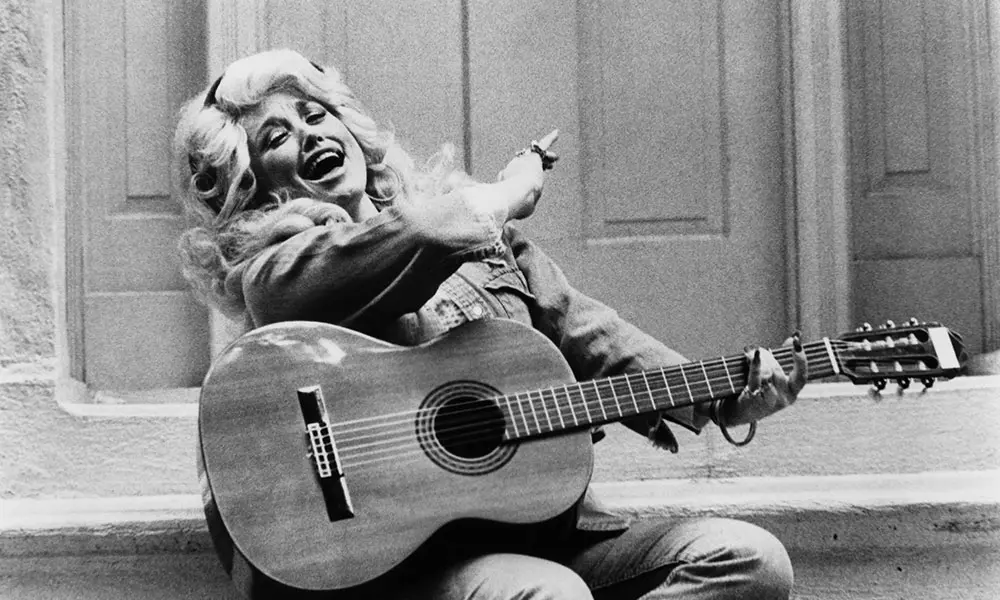
10. The Bargain Store
Released in 1975, “The Bargain Store” captures one of Dolly Parton’s greatest gifts as a songwriter: her ability to take an everyday image and quietly transform it into something deeply human. Here, the idea of a bargain store becomes a metaphor for emotional scars, lost love and the possibility of beginning again. In someone else’s hands, the concept could easily have become overly sentimental. Dolly makes it feel conversational, as though someone is sitting across the kitchen table telling you what happened to her and why she has finally decided to move forward.
That emotional honesty was a defining quality of her songwriting. Dolly rarely needed complicated language to make a listener understand pain. She wrote about ordinary lives in ordinary words, but there was almost always another layer underneath them. “The Bargain Store” is not simply a song about disappointment; it is about understanding that having been hurt does not make someone less worthy of being loved again. It remains one of the songs that best represents the mixture of vulnerability and resilience at the heart of Dolly’s classic country writing.
9. Love Is Like a Butterfly
Few images became as naturally associated with Dolly Parton as the butterfly. Long before butterflies appeared across tribute artwork, jewelry and memorabilia connected to her, “Love Is Like a Butterfly” had already given the symbol a special place in her musical story. Released in 1974, the song is gentle and delicate, presenting love not as something that can be owned or controlled but as something beautiful precisely because of its fragility.
There is a softness to the recording that separates it from some of Dolly’s more dramatic songs. It does not demand attention; it seems to float into it. That restraint is part of its charm. Dolly was capable of enormous personality, humor and theatricality, but songs such as this remind us that she could also communicate through simplicity. The butterfly became such a fitting symbol for her because it reflected something about the artist herself: colorful, immediately recognizable, seemingly lighthearted, yet capable of carrying far more meaning than first meets the eye.
[Listen Love Is Like a Butterfly]
8. Why’d You Come in Here Lookin’ Like That
By the time Dolly released “Why’d You Come in Here Lookin’ Like That” in 1989, she had already experienced several different careers inside one lifetime. She had been a traditional country star, a pop crossover success, a movie actress and one of the most famous personalities in American entertainment. Yet this record showed that she could still step back into contemporary country music and sound completely at home.
The song is playful, flirtatious and full of the personality that made Dolly such an entertaining performer. It reached No. 1 on the country chart and became an important hit during a period when a new generation of country stars was emerging. What makes it memorable decades later, however, is not simply the chart position. It is the unmistakable sense of fun in her delivery. Dolly’s catalog contains extraordinary songs about hardship and heartbreak, but her legacy would be incomplete without remembering how frequently she made people smile. She understood that country music could cry one moment and laugh at itself the next.
[Listen Why’d You Come in Here Lookin’ Like That]
7. My Tennessee Mountain Home
To understand Dolly Parton, you eventually have to return to Tennessee. Fame took her around the world, Hollywood put her on movie screens, and her business ventures turned her into an international brand, but the Smoky Mountains remained one of the emotional centers of her work. “My Tennessee Mountain Home,” released in 1973, feels almost like a musical photograph of that connection.
Dolly grew up as one of twelve children in a poor family in rural East Tennessee, and those beginnings repeatedly found their way into her songs. Yet she rarely treated her childhood simply as a story of deprivation. Instead, she remembered mountains, family, music, faith and the small details that made a place feel like home. Reuters noted after her death that the difficult circumstances of her childhood gave authenticity to many of the deeply personal songs she would later write.
That is what makes “My Tennessee Mountain Home” so important in a retrospective like this. It takes us back before the awards, the movies, Dollywood and the international fame, to the landscape that shaped the young songwriter underneath all of it. Dolly eventually became one of the most recognizable women in entertainment, but she never stopped sounding like someone who remembered exactly where she came from.
[Listen Tennessee Mountain Home]
6. Here You Come Again
“Here You Come Again” marked one of the most important transitions in Dolly Parton’s career. Released in 1977, it helped introduce her to a much broader pop audience without completely disconnecting her from the country listeners who had already embraced her. The song spent five weeks at No. 1 on the country chart and became one of the defining recordings of her crossover era. Unlike many of the songs most closely associated with Dolly, it was not written by her; Barry Mann and Cynthia Weil wrote it.
What Dolly brought to it was personality. Her voice could sound playful and wounded at exactly the same time, which was perfect for a song about someone who keeps returning and undoing all the emotional progress you thought you had made. That ability to inhabit someone else’s composition as naturally as her own helped broaden the scope of her career.
More importantly, “Here You Come Again” proved that reaching pop audiences did not require Dolly to erase what made her distinctive. The accent was still there. The warmth was still there. The sense that she was singing directly to one person rather than performing for millions was still there. The audience simply became much larger.
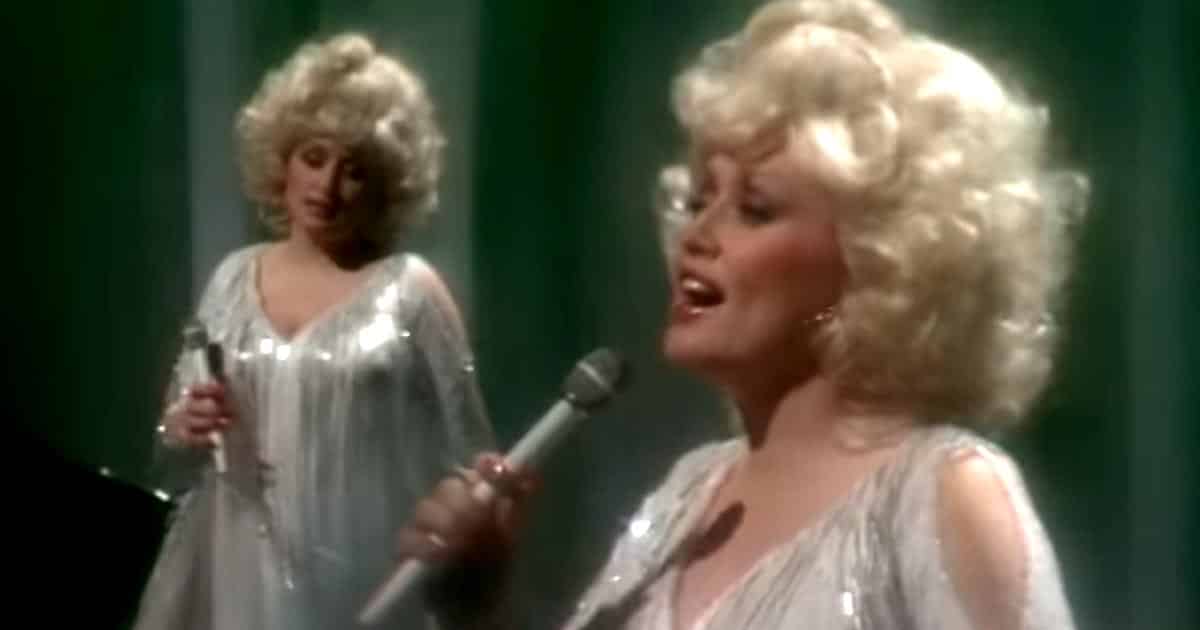
5. Islands in the Stream
There are duets in which two famous singers happen to share a recording, and then there are duets that become impossible to imagine with anyone else. “Islands in the Stream,” recorded by Kenny Rogers and Dolly Parton in 1983, belongs firmly in the second category.
Written by the Bee Gees, the song became a No. 1 country hit and one of the most recognizable country-pop collaborations of its era. Yet statistics only explain part of its appeal. What listeners remember is the chemistry. Kenny’s grounded voice and Dolly’s brighter tone moved naturally around each other, giving the record a warmth that made the relationship at its center feel believable. Their friendship outside the recording studio only deepened the affection audiences developed for the song over the years.
The passing of time has made it even more poignant. Kenny Rogers died in 2020, and Dolly often spoke affectionately about her longtime friend and collaborator afterward. Listening to “Islands in the Stream” today can therefore feel different from hearing it decades ago. What once sounded simply joyful now also preserves a moment when two beloved voices existed together in the same room, forever young inside the recording.
Following Dolly’s death, it was among the songs listeners immediately returned to, generating around 1.8 million U.S. streams on August 25 alone. Great recordings have a strange relationship with time: the people who made them eventually leave us, but pressing play brings their voices back within seconds.
[Listen Islands in the Stream]
4. Coat of Many Colors
If “My Tennessee Mountain Home” tells us where Dolly came from, “Coat of Many Colors” tells us something even more important about what she carried with her when she left.
Released in 1971, the autobiographical song tells the story of a coat Dolly’s mother made for her from pieces of fabric when the family could not afford something new. The young Dolly was proud of what her mother had created, only to be mocked by other children at school. Out of that small childhood memory came one of the most enduring songs about poverty, dignity and the difference between having money and feeling rich.
The Library of Congress, which added the recording to the National Recording Registry, describes the song as an affectionate account of an impoverished Tennessee childhood made rich by family love. Dolly herself regarded “Coat of Many Colors” as a favorite among her compositions because of the philosophy it represented.
That distinction matters. Dolly never romanticized every difficulty of growing up poor, but neither did she allow poverty to become the only thing that defined those years. The coat had little monetary value, yet it contained the labor and love of her mother. As Dolly’s fame and wealth grew to almost unimaginable proportions, the story became even more powerful because she continued to tell it.
It is one of those rare songs whose meaning expands with age. A child can understand the cruelty of being laughed at. An adult can understand a mother’s attempt to provide something beautiful with what little she has. And anyone can understand the realization that value is not always determined by a price tag.
3. 9 to 5
The opening seconds of “9 to 5” are enough to change the atmosphere of a room. The rhythm arrives, Dolly’s voice follows, and suddenly a song written for a 1980 comedy about office workers becomes instantly recognizable more than four decades later.
Dolly wrote “9 to 5” for the film in which she starred alongside Jane Fonda and Lily Tomlin, and the song became one of the biggest crossover successes of her career. It reached the top of the Billboard Hot 100, earned a Grammy for Best Country Song and brought Dolly an Academy Award nomination for songwriting.
Its endurance comes from more than an irresistible melody. Beneath the humor and energy is a sharp understanding of what it feels like to work hard while somebody else seems to receive the rewards. Dolly could address frustration without turning the song into a lecture. She made it funny enough to sing along with and truthful enough for millions of workers to recognize themselves in it.
That balance is one reason Dolly reached audiences who might never have considered themselves country fans. “9 to 5” did not ask listeners to enter a specific musical world before they could understand it. Everyone knew what a difficult boss felt like. Everyone knew the exhaustion of getting up and doing it again. The details were specific, but the feeling was universal.
When people returned to Dolly’s music after her death, “9 to 5” was one of the three most-streamed songs in her catalog, with roughly 2.3 million U.S. streams that day. The working day has changed considerably since 1980. The song somehow has not.
2. I Will Always Love You
Few songs have ever had a second life quite like “I Will Always Love You.” Many listeners around the world first encountered it through Whitney Houston’s monumental recording for The Bodyguard, yet the song began somewhere much quieter: with Dolly Parton saying goodbye.
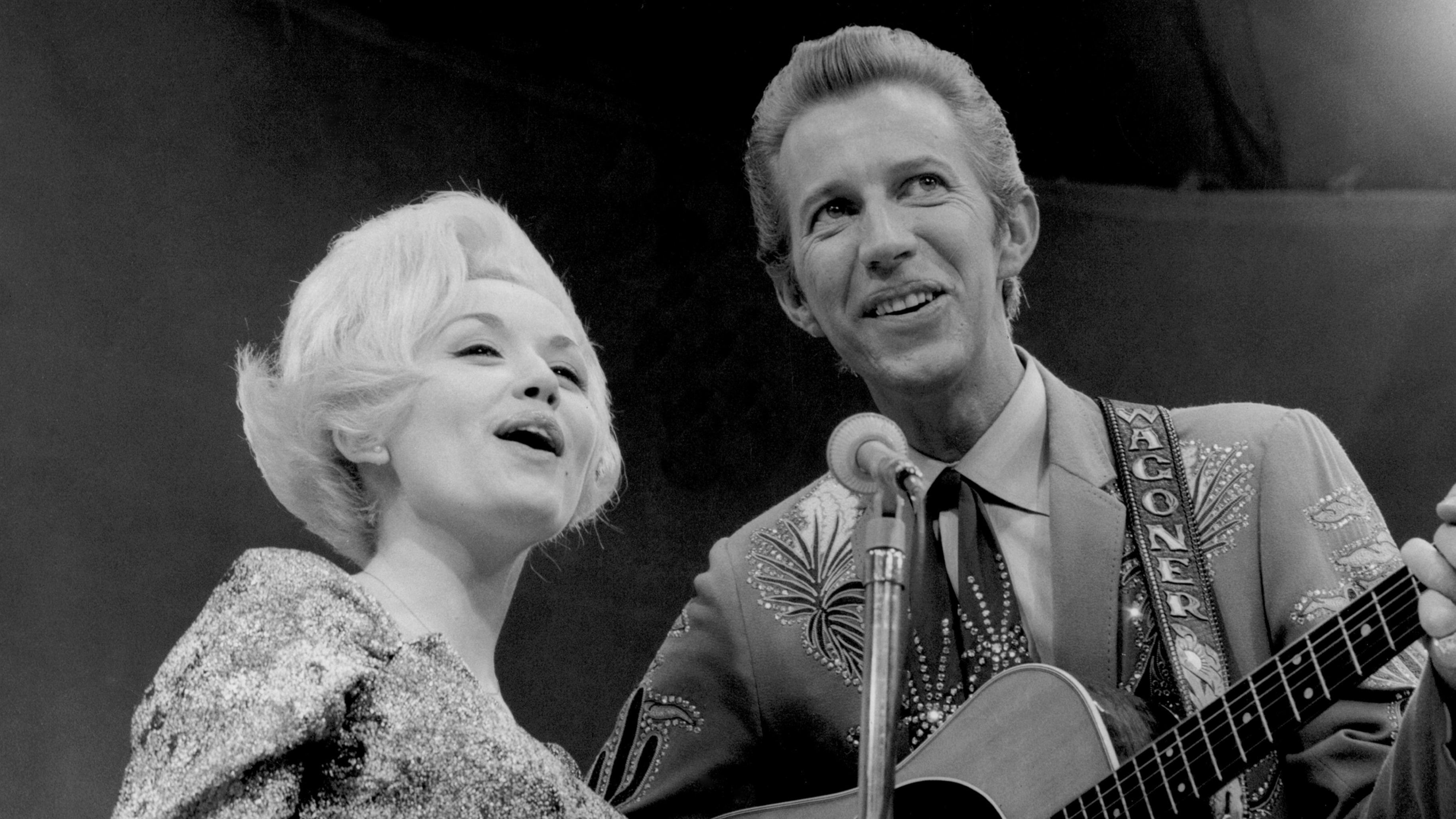
Dolly wrote it as she prepared to leave her professional partnership with Porter Wagoner and pursue her career independently. Her original recording reached No. 1 on the country chart in 1974. Remarkably, when she recorded it again for The Best Little Whorehouse in Texas, the new version reached No. 1 again in 1982. Whitney Houston would later transform the composition into one of the most famous vocal performances in pop history, taking a song born from Dolly’s personal farewell to audiences around the world. The cultural significance of Dolly’s recording was eventually recognized with its selection for the National Recording Registry.
Its power has always come from the contradiction at its center. Leaving someone does not necessarily mean you have stopped loving them. Sometimes love is precise
In 1994, Dolly Parton Gave Whitney Houston Her Grammy for ‘I Will Always Love You’
ly what makes a goodbye difficult. Dolly understood that distinction and wrote it without bitterness. There is gratitude in the song, but there is also finality.
That makes listening to it after her death especially difficult and especially beautiful. A song Dolly once wrote to close one chapter of her own life now sounds, inevitably, like a farewell traveling in the opposite direction. Millions of listeners who never met her are left with the same basic feeling: sadness because something has ended, gratitude because it happened at all, and affection that does not disappear simply because the person is gone.
There could hardly be a more fitting sentiment with which to remember her.
[Listen I Will Always Love You]
1. Jolene
And then there is “Jolene.”
Four syllables became enough to identify one of the most famous country songs ever recorded. Released during the early 1970s and included on Dolly’s 1974 album of the same name, “Jolene” is deceptively simple. One woman addresses another woman whom she believes could take away the person she loves. There is no revenge fantasy, no elaborate confrontation and surprisingly little anger. Instead, Dolly gives us vulnerability.
That vulnerability is what makes the song extraordinary. The narrator does not pretend to feel stronger than she does. She describes Jolene’s beauty, acknowledges her own fear and asks her not to take the man she loves. The emotional tension never requires a complicated plot because the listener understands the situation almost immediately.
Over the decades, “Jolene” escaped the boundaries of country music completely. Artists from different genres and generations reinterpreted it, while younger audiences continued discovering the original. Reuters noted the remarkable range of artists who have covered the song, from The White Stripes to Beyoncé. Billboard later placed “Jolene” at No. 1 on its ranking of the 100 best country songs of all time, and after Dolly’s death it became the most-streamed song in her catalog in the United States that day, drawing about 2.7 million streams.
Numbers, however, cannot quite explain why it lasts. Maybe the answer is that “Jolene” contains almost everything Dolly did well in one recording: a story you understand immediately, an unforgettable melody, emotional honesty and a voice that sounds vulnerable without ever sounding weak.
For many people, “Jolene” is the first Dolly Parton song they know. For others, it is the song they return to after exploring everything else. Either way, it has become larger than the era that produced it. Long after fashions, formats and music industries have changed, someone somewhere will almost certainly sing that name again.
And when they do, Dolly will still be there.
More Than Ten Songs: The Legacy Dolly Parton Leaves Behind
Any list of ten songs inevitably leaves something important outside it. There is “Two Doors Down,” “Joshua,” “The Seeker,” “Tennessee Homesick Blues,” “Light of a Clear Blue Morning,” “Baby I’m Burnin’,” “Real Love,” “It’s All Wrong But It’s All Right” and decades of album tracks that different listeners would insist belong here. Dolly’s own official Diamonds & Rhinestones: The Greatest Hits Collection stretches across 23 recordings from 1971 through 2020, which still captures only a fraction of the work she created.
That enormous catalog is central to understanding her legacy. Reuters reported that Dolly wrote an estimated 3,000 songs over her lifetime and sold more than 100 million records. She accumulated 25 No. 1 songs on Billboard’s country charts, won 11 Grammy Awards, entered both the Country Music Hall of Fame and the Rock & Roll Hall of Fame, built Dollywood, appeared in films and television, and became an unusually successful businesswoman without allowing any of those achievements to overshadow her identity as a songwriter.

[View the Dolly Parton Iconic Cowboy Hat – Best Gift for Country Music Fans →]
But reducing Dolly to achievements would miss much of what made people love her. Her legacy also lives inside millions of children’s books delivered through the Imagination Library, in the educational and charitable causes she supported, in the musicians she encouraged, and in the peculiar ability she had to be enormously famous while still making people feel that she understood ordinary lives. After her death, tributes came from across music and from around the world; Buckingham Palace’s King’s Guard even performed “9 to 5,” while the Empire State Building illuminated the New York skyline in pink.
Those gestures were really saying the same thing in different ways. Dolly Parton had become part of people’s lives.
A person can leave. A voice recorded on a song does something different. It waits.
Years from now, someone will hear “Coat of Many Colors” and think of their mother. Someone will play “9 to 5” on the way to a job they cannot stand. Someone with a broken heart will discover “I Will Always Love You.” A teenager who was born decades after Dolly recorded “Jolene” will hear that guitar pattern for the first time and wonder why a song so old feels so immediate.
That is how a musical legacy continues.
Keeping Her Memory Close: Dolly Parton Tribute Keepsakes
Music will always be the most meaningful way to remember Dolly, but fans have also long expressed their connection to artists through the objects they keep around them. A photograph on a shelf, an ornament brought out every Christmas, a piece of jewelry worn on certain days or a glass raised while a favorite record is playing can become part of the ritual of remembering. For fans who would like something tangible alongside the songs, a number of fan-made Dolly Parton tribute keepsakes have been created around the imagery that defined her life and music.
Dolly Parton 80 Years Memorial Charm Bracelet
The Dolly Parton 80 Years Memorial Charm Bracelet gathers several familiar pieces of Dolly imagery into one wearable tribute. A guitar recalls the songwriter, a microphone the performer, a cowboy boot her country roots, and butterfly details reflect one of the symbols most closely associated with her style and music. Rather than centering the memorial entirely on loss, the bracelet can be read as a collection of small reminders of the things fans loved about her across eighty years of life.

[View the Dolly Parton Memorial Charm Bracelet →]
Dolly Parton 80 Years In Loving Memory Tribute Whiskey Glass
For fans who prefer something that can sit naturally in a home collection, the Dolly Parton 80 Years In Loving Memory Tribute Whiskey Glass combines commemorative 1946–2026 artwork with a portrait-inspired design. A tribute glass has an appropriate simplicity to it: put on an old Dolly record, pour a favorite drink and raise a quiet toast to the woman who gave the world so many songs worth returning to.

[View the Dolly Parton Tribute Whiskey Glass →]
Dolly Parton In Loving Memory 1946–2026 Commemorative Pen
The Dolly Parton In Loving Memory 1946–2026 Commemorative Pen offers a more understated kind of remembrance. Decorated around Dolly-inspired portrait, guitar and butterfly imagery, it is the sort of keepsake that can remain on a desk rather than being packed away in a collection. There is something especially appropriate about remembering a songwriter with an object made for writing; for Dolly, the words always came first.

[View the Dolly Parton Commemorative Pen →]
Dolly Parton Memorial Christmas Ornament
Christmas ornaments often become more emotional with time because they return once a year carrying all the memories attached to them. A Dolly Parton Memorial Christmas Ornament, featuring her with a guitar alongside commemorative 1946–2026 details, can become one of those small traditions. Each Christmas it can return to the tree, bringing with it the music, the stories and perhaps the memory of the first year the world had to celebrate the holidays without Dolly in it.

[View the Dolly Parton Memorial Ornament →]
Dolly Parton Queen of Country Tribute Ring
The Dolly Parton Queen of Country Tribute Ring turns familiar Dolly imagery into something that can be worn rather than simply displayed. Butterfly details and “Queen of Country” styling make it a more personal fan tribute, especially for listeners who have carried her music with them for years. It is less about commemorating one moment than about keeping a small symbol of that connection close.

[View the Dolly Parton Tribute Ring →]
Dolly Parton Tribute Guitar Whiskey Decanter
Of the tribute pieces, the Dolly Parton Tribute Guitar Whiskey Decanter perhaps connects most directly with the subject of this list. Its guitar-shaped form points back to the instrument that accompanied so much of her songwriting life, while the portrait, floral and butterfly-inspired details turn it into a display piece centered around her musical identity. For someone building a Dolly collection or creating a small music corner at home, it can sit naturally beside albums, photographs and other memorabilia as a reminder of where the story always began: a woman, a guitar and a song.

[View the Dolly Parton Tribute Guitar Whiskey Decanter →]
These pieces are not a replacement for the music, nor should they be. The songs are what made the memories possible in the first place. They are simply another way for fans who want a physical keepsake to hold onto a connection that was built over years of listening.
Final Thoughts: I Will Always Love You, Dolly
It is tempting, after the death of someone as famous as Dolly Parton, to summarize a life through numbers. Eighty years. Nearly six decades of stardom. Thousands of songs. More than 100 million records sold. No. 1 hits, Grammys, movies, awards and millions upon millions of books placed into the hands of children.
All of those numbers matter. None of them explains Dolly.
You find her more clearly in a homemade coat stitched together by a mother who did not have money for a new one. You find her in a young woman asking Jolene for mercy instead of pretending not to be afraid. You find her in the exhausted worker getting up for another nine-to-five day, in the mountains of Tennessee she carried with her to Hollywood, and in a goodbye song written with enough generosity to wish someone happiness even while walking away.
That is why Dolly Parton’s death feels personal to people who never knew her personally. Her songs spent decades entering moments in other people’s lives. They played at weddings and funerals, in cars and kitchens, on radios during long workdays and through headphones during lonely nights. Eventually they stopped belonging only to the woman who wrote or sang them. They became attached to our own memories.
Dolly once hoped that, when everything else was finished, she would be remembered above all as a good songwriter. Reuters recalled that sentiment in looking back on her life after her passing.
She does not have to wonder anymore.
From the mountains of Tennessee to stages around the world, Dolly Parton spent a lifetime turning ordinary human feelings into songs people could carry with them. The woman who wrote them is gone, but the stories have not gone anywhere. “Jolene” will be played again. Someone will discover “Coat of Many Colors” for the first time. “9 to 5” will begin another workday. And somewhere, when saying goodbye feels impossible, “I Will Always Love You” will say what somebody cannot find the words to say themselves.
As long as those songs continue to be heard, sung, shared and passed from one generation to the next, Dolly Parton will never be entirely absent.
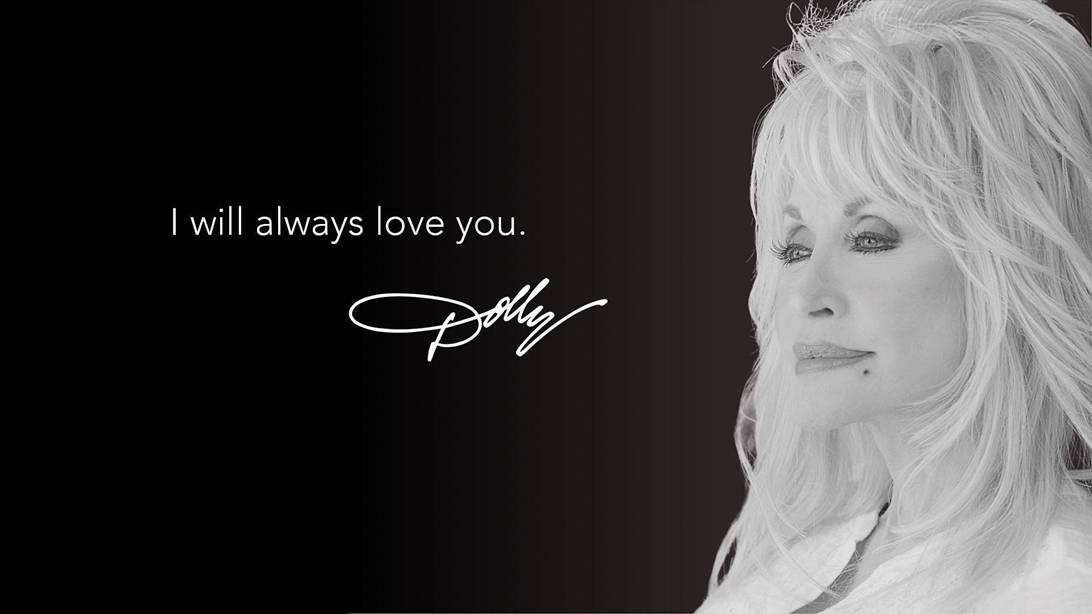
We will always love you, Dolly.